
AI is a modeling problem
- A different perspective

Introduction
We have been trying to solve the “AI problem” for decades. But where exactly the actual problem lies?. Most of the current AI breakthroughs focus on large scale training of neural networks. But what if the bottleneck is not the size, but how we model the world?
AI is a modeling problem
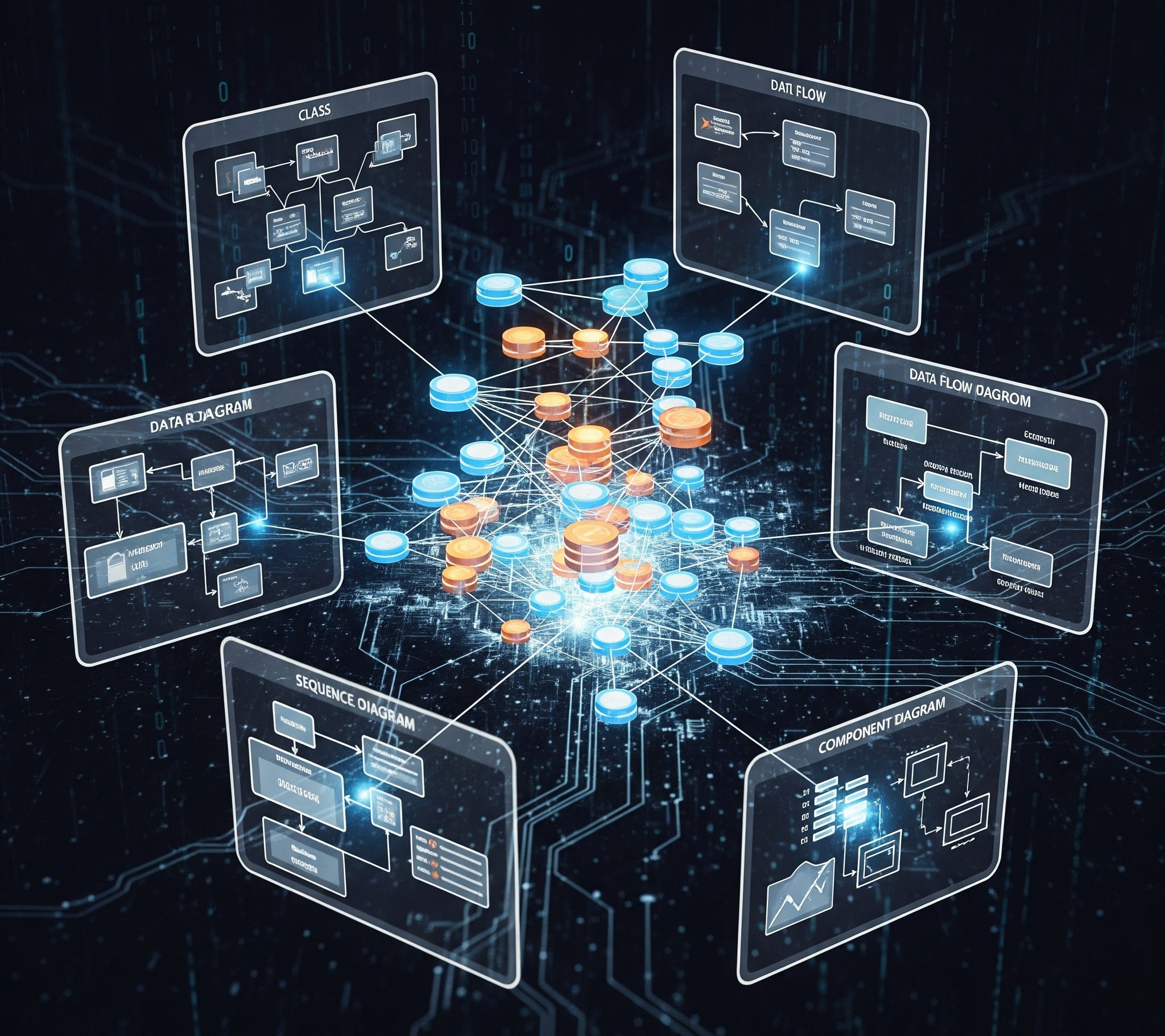
I don’t mean “Large Language Models” . It means how we represent our mental constructs in computer memory. Classes/Structures/Schemas etc are our primitive attempts to solve this problem. Gradually this obvious, omnipresent problem got overlooked and now we are infatuated with LLMs. The De-facto meaning of AI currently is LLM based AI. LLM based AIs use statistical approximation to model text. But a true AI system should model facts just like how your banking software represents models about bank, account,transaction, customer etc (not a text representation) and relationships/interactions between them. The problem we face is: we cannot build a generic software(AI) like that for the millions of concepts/facts the human mind can handle for simulating human intelligence and that is the “modelling problem” . i.e How we model our mind content in computer memory and how to create these models from a natural language ?. For more insights into what is modeling problem, please see the video below.

Once the modeling problem is solved, following are the possibilities
AI will act/behave as software
The cognitive dissonance of Code generation
Have you ever wondered why multi billion dollar AI companies promote code generation when they have all knowing AI with them?
Below are a few statements to build the context.
We write code because computers do not understand natural language.
This is one of the first things we learn about computers .We invented programming languages. We meticulously created software to tell computers “what it should do” . For every problem that can be solved /acted upon by computers, there is a software for that . Then we found this repetitive, mundane task boring and less intellectually challenging and started thinking about how we can make a generic software which simulates human intelligence. So that we don’t have to write code for each and every problem to make computers understand. We started calling this generic software as “Artificial Intelligence” .When ‘normal’ software is a way to make computers understand, isn’t it true that AI software is a kind of ultimate form of making computers really understand things? .
When we have all-knowing AI but still use that AI to generate code (the purpose of generating code is to tell computers what we want) instead of telling AI what we want is a kind of “defeating the purpose” or probably the “code generating” AI doesn’t really understand things as it appears to be.
The reason why AI exists is to have a generic solution and now we are using AI to make a specific solution by generating code. Isn’t it a kind of cognitive dissonance?
It is perfectly fine to generate code to help developers but that is a demonstration of AI capability rather than a necessity.The easiest and simplest thing that a true AI system would do is to behave/act like a software
When the AI really starts understanding natural language and connects facts organically, the easiest thing to do is to use it as a replacement for traditional software. Why? The intelligence embedded in a typical software is nothing compared to the kind of vast intelligence the AI is supposed to have eventually (The human intelligence).
To show how this works, below given is a software builder PoC demo video which is nothing but an AI engine prototype acting/behaving as a software. This simple demo shows creation of the Sign-in/Sign-up modules of a web-app which includes the login logic/user creation and role management. This also demonstrates how models are dynamically created and changed from natural language. We can create and manipulate any domain models just like how a ‘User’ is created in this demo. This implies we can create millions of such models on the fly.

For curious programmers, here are some key points about the PoC shown in the demo video
This is a proprietary AI engine prototype based on a solution of the “modeling problem” and not LLM based or Generative AI.
This demo is all about to show the basic building blocks of the idea that is put forth in this article. Higher level concepts (mainly time,psychology,reasoning,
conflict handling etc) are not implemented and not needed for this demo but can be easily implemented if we get the solution for the modeling problem right.
This is not a DSL or a rule based system - not a GOFAI.
The only knowledge it has is the knowledge about some common English words and knowledge about their types like if it is a noun,adjective,verb etc.
The software shown doesn’t have a back-end or a back-end design.
No code generation.
No application specific API or code.
Instead of API, natural language is used (The moment we declare an API for external world, we are creating a tool not AI).
No front-end design or integration (There is no back-end API to be called)- the demo currently shows some UI configuration but it can be eliminated altogether.
Instructions are given in natural language and it is heard and executed by the AI engine.Instead of talking back in text- it shows UI.
In a production setup, when more and more such instruction sets are available (the experience), a statement like “build an order management system” will make the AI behave like a software.It will ask back for confirmation if it sees more than one path(choice) in its experience.
All models used in the demo are dynamically created.
Models will get more sophisticated as and when more observations are made. E.g. The statement “dog is an animal” creates a partial information piece like “something called dog is something called animal” and when another piece of information “dog has tail” is entered(observed), the dog and associated models will get more enriched. Basically it creates meaning from experience. Meaning depends on context. The key here is the kind of mechanism we use to get that level of sophistication without encountering the “scaling problem” that classical symbolic modeling would encounter.


Chat bots with true understanding and psychology
Once the modeling problem is solved, following 3 critical factors can be built into AI system easily
Time
About how time is modeled.
Psychology
Without psychology there is no AI. Decision are based on the gratification level (the pleasure/ pain points) according to the given psychology and can be good or bad according to observer/designer
Reasoning- The why/how question
Human reasons are basically observations from experience - there may not be a ironclad, concrete mathematical equation to explain a reason as it may sound when we say “reason” . If stones around my house sing a song at 6:30 AM everyday from the time immemorial and if I am asked why there is a sound at 6:30 AM, I would say “that is stones singing” I have no clue why stones are singing. But still it is a reasonably “logical” answer. Human reasons are like that. Some are very detailed but ultimately at some point it will again stand as an observation to be explored further
All points mentioned above will be built on top of the modeling problem solution as all of the above are ultimately information pieces that can be modeled just like any other information. At this point chat bots with autonomous decision making/empathy/reasoning can be built.
True AI
As and when the knowledge base of AI develops, it will excel humans in most of the aspects.Only thing that may be missing from these systems could be the divine spark that triggers new inventions/ideas happening to humans out of nowhere. Intelligent robots will really start helping humans. Whether it will ultimately be good or bad for humanity remains to be seen. But no matter what, this is going to happen sooner or later.
On a lighter note:
There is no need for a “Sarah Connor” to protect humanity as a creator always has the upper hand until he/she lets loose control. As with every technological advancements, there will always be bad/good (again relative) AI to create the equilibrium .
CONCLUSION
There could be multiple ways to solve the “modeling problem”. But solving that, one way or other, is more important than aiming for next trillion parameter LLM to achieve true AI a.k.a AGI
Hope this article got you intrigued if not convinced about the modeling problem.
You'd be interested in my site signal-zero.ai
I solved the modeling problem, with a generalized symbolic format. It can model anything from psychology, which the biggest knowledge domain I've built so far, to web parsing formats, which it can dynamically find, test and persist.